



DVES Prize 2027: Call for applications
The unique French prize dedicated to nonanimal research
The call for applications is now closed.
The award ceremony will take place in early 2027.
Created in 2013 by the Pro Anima Scientific Committee, the EthicScience Prize became the Descroix-Vernier EthicScience (DVES) Prize in 2023, marking the convergence of the objectives and values of Pro Anima and the Fondation Descroix-Vernier.
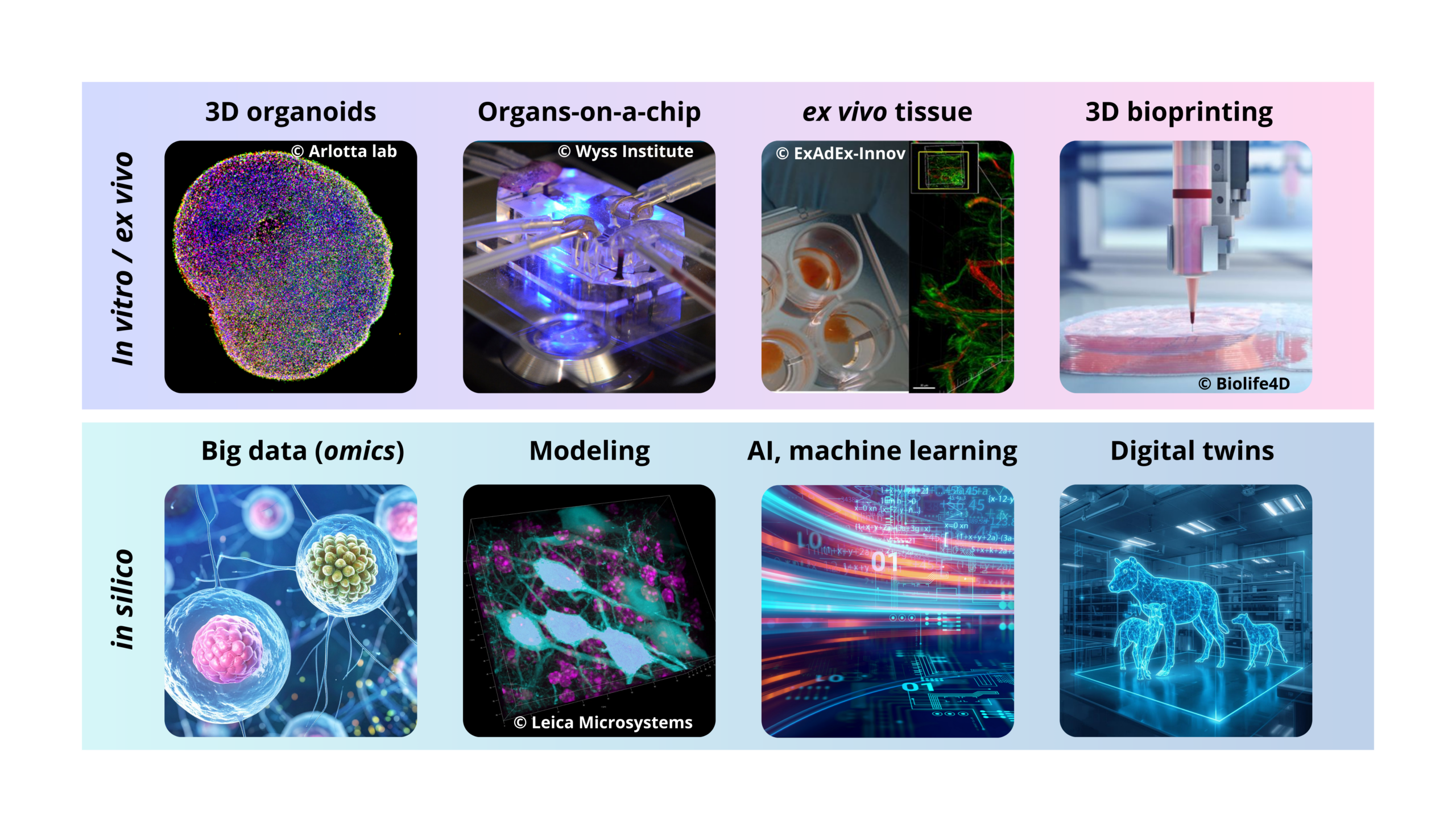
With a total endowment of €110,000 awarded across three categories, the DVES Prize is among the most generously funded in Europe, entirely dedicated to scientific research and cutting-edge technologies that could yield more conclusive results than traditional models (2D in vitro or in vivo animal studies).
These new approaches are also grouped under the acronym NAM (New Approach Methodologies).
The DVES Prize awards nonanimal NAMs-based* research in human health within the biomedical (basic or applied) or toxicological fields.
*the use of animal-derived biomaterials or reagents would be accepted provided that there is clear justification.
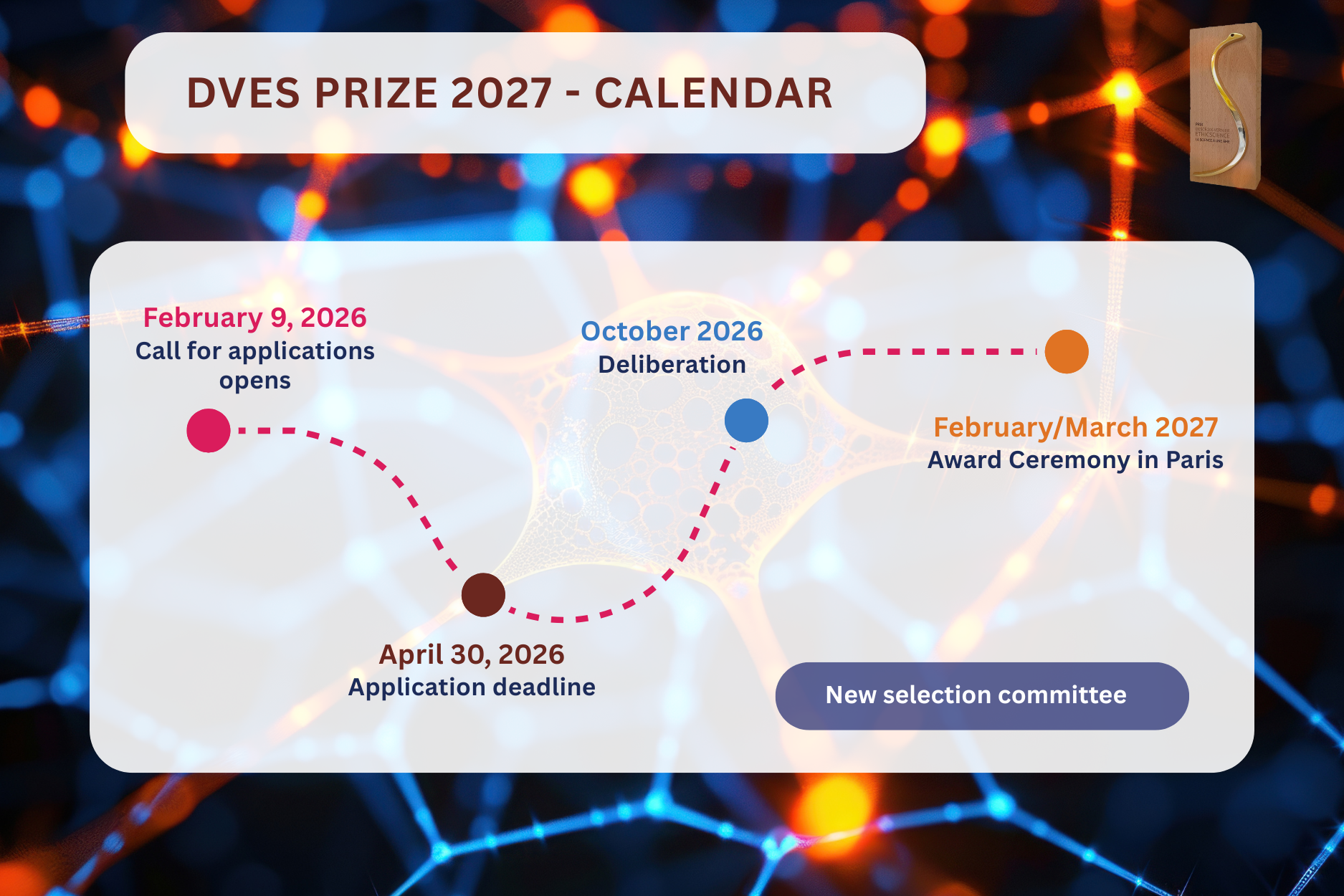
🔵 The next DVES Prize will be awarded in 2027.
🔵 The deadline to apply is May 31, 2026.
For an overview of the 2027 edition timeline, please see below.
Categories and selection criteria
One research project per category will be awarded the DVES Prize.
The categories are: Innovation; Qualification; and Jury Prize – Research Hope.
Funding is intended to support ongoing or future research projects (material costs, publications, contracts, etc.).
NB: The same laboratory or company may apply in several categories, provided that the applications are clearly distinct and meet the eligibility criteria.
Discover the laureates of the 2025 edition
✨ INNOVATION — Pushing Scientific Boundaries
€ 50,000

This grant aims to reward the development of innovative and original research tools, and/or scientific work that addresses an untapped scientific frontier.
The project must be high-risk and/or demonstrate a strong ambition.
Project Leader Eligibility: The project leader must be affiliated with a French institution, in the private or academic sector. They may be a researcher, postdoctoral fellow, engineer, team leader, or project leader. Projects submitted with a co-applicant from an international organization are strongly encouraged.
Project eligibility: This project aims to reward research projects that are already well-advanced and must present robust data and initial results.
- Essential criteria: innovative, significant scientific advancement, health, risk assessment, in silico and/or in vitro 3D, human data, animal-free, high-risk
- Added value: combination of NAMs (tools and data), sustainability, national and international reach, transdisciplinarity, intersectoral (private/public)
✨ QUALIFICATION & APPLICABILITY — Cutting-edge Science for Real-World Impact
€ 50,000

This grant aims to reward the integration of tools and/or data for translational research or regulatory assessment (in toxicology or pharmacology). The project must demonstrate strong potential for application or qualification, consistent with evolving regulatory frameworks and scientific standards.
Project Leader Eligibility: The project leader must be affiliated with a French institution, in the private or academic sector. They may be a researcher, postdoctoral fellow, engineer, team leader, or project leader. Projects submitted with a co-applicant from an international organization are strongly encouraged.
Project Eligibility: This grant aims to reward a research project that has demonstrated its relevance/potential in diagnostics, treatment, or risk assessment. It must present robust data and results.
- Essential criteria: applicable, proof of concept, qualification, fit for purpose, in silico and/or in vitro 3D, human data, animal-free
- Added value: aligned with a validation, standardization, and/or regulatory framework (ISO, EMA, ECHA, OECD), national and international scope, intersectoral (private/public)
✨ JURY’S PRIZE — Recognizing Visionary Research
€ 10,000

This prize aims to recognize visionary research and/or a research team based on the quality, originality, and exceptional ambition of their work.
Project Leader Eligibility: The project leader must be affiliated with a French institution, in the private or academic sector. They may be a junior or senior researcher, postdoctoral fellow, engineer, or team or project leader.
Project Eligibility: This prize aims to reward an ongoing or advanced research project, which must present preliminary data or promising results.
- Essential: originality, ambition, in silico and/or in vitro 3D, human data, no animals
- Added value: implementation of a transdisciplinary ecosystem (dialogue with the social sciences, ethics, collaborative spirit), addressing communities or populations at risk or underserved populations, transparency and accessibility (open science, commitment to communicating with the scientific community and the general public)
2027 Calendar
Selection process
Projects are reviewed by the Pro Anima Scientific Board and expert external reviewers, forming a multidisciplinary and multisectoral panel to ensure the quality, transparency, and impact of the Prize.
The selection process is fair, transparent, and straightforward, consisting of three stages:
Step 1 (Pro Anima)
- Eligibility and category selection
- Anonymization of forms
Step 2 (External reviewers)
- Review of the anonymous form → solely based on the scientific relevance and quality of the project
Step 3 (Scientific Advisory Board)
- Evaluation of the top 5 projects in each category, based on reviewer reports, taking into account information from the applicant’s CV(s) and the requested references
A quota system is in place for the final evaluation and selection of the projects to be awarded.
Reviewers and members of the Scientific Advisory Board are bound by a confidentiality and conflict of interest declaration (if, at any stage of the process, a reviewer becomes aware of a connection to a project/applicant, their evaluation will be disregarded).
Deliberation and contract
Scientific Council deliberation: expected in October 2026.
Winning projects will be contacted before the end of the year.
The official announcement will be made on the day of the Prize ceremony in the first quarter of 2027 (date to be announced later).
The agreements related to the grant are signed between Pro Anima and the French structure of affiliation of the project leader (which would be, in the case of international collaborative projects, the French host institution), structure that will receive the entire grant.